CONTEXT
The future parks of Târgu Mureș are embedded within a diverse landscape shaped by water systems, with the Mureș River as its primary structuring element. This setting creates a layered spatial condition of riparian zones, wet forests, open grasslands, and urban green areas.
The project responds to key questions of identity, continuity, and integration—seeking to reveal the site’s inherent landscape values, reconnect the city with the river, and reconcile built structures with natural systems. It redefines the role of the contemporary urban park as a space equally important for people and ecosystems.
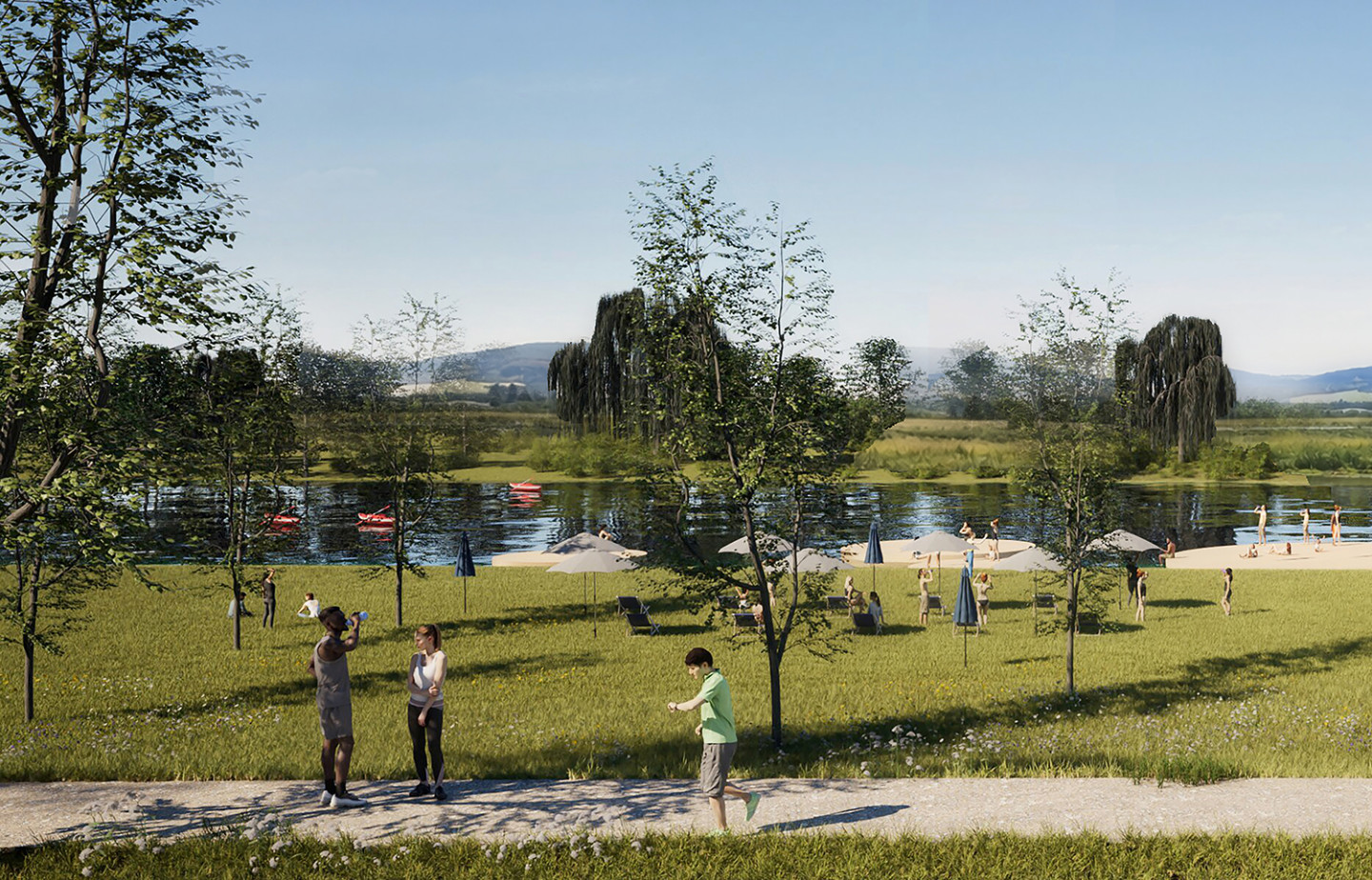
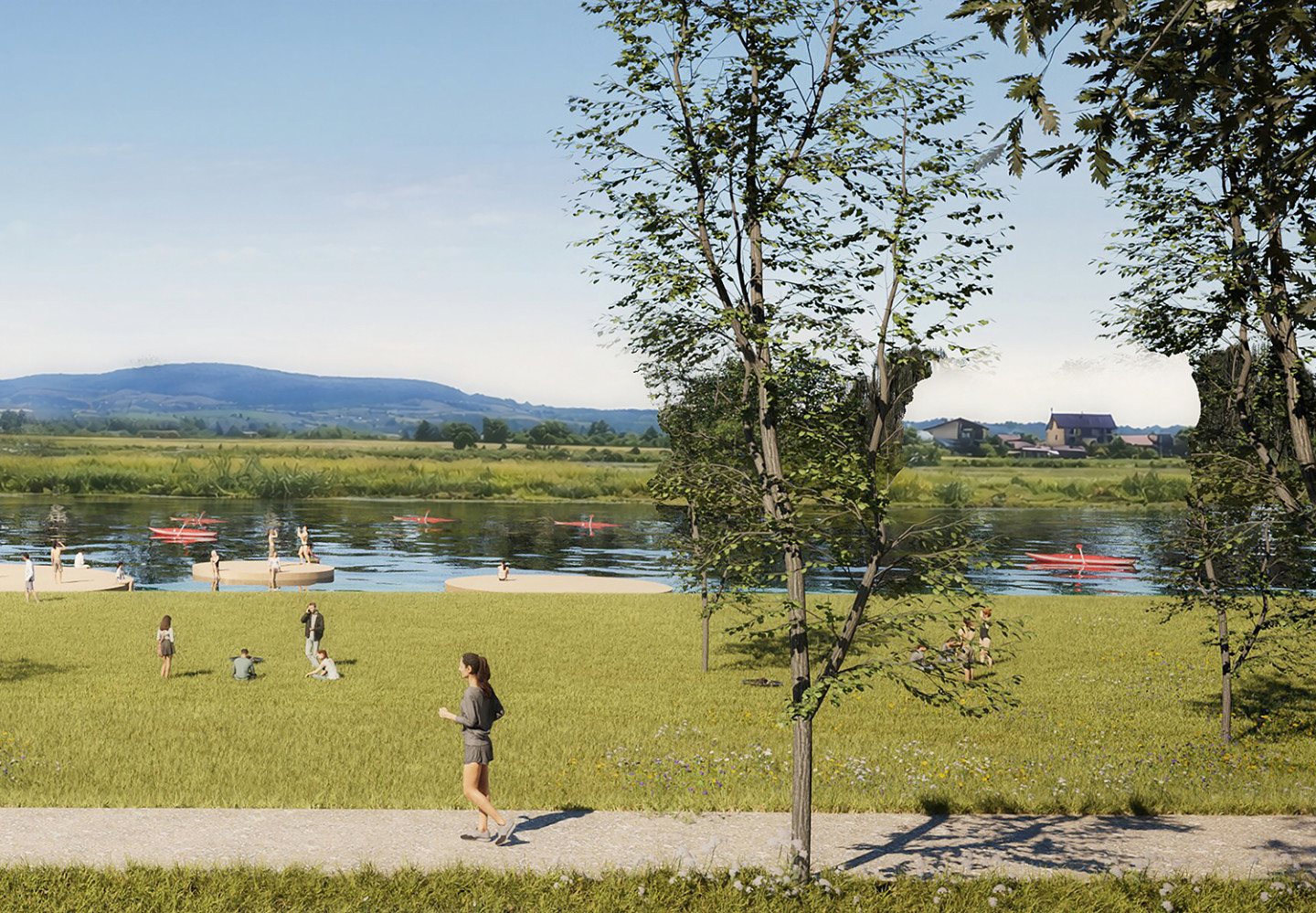
At the core of the composition lies the Mureș River, acting as the ecological backbone of the entire landscape. By transforming rigid riverbanks into soft, biodiverse edges, the project restores continuity between land and water while establishing a resilient green-blue infrastructure.
CONCEPT
The park is conceived as a regenerative landscape—a living system designed for physical and psychological recovery, rooted in the restorative capacity of forest ecosystems. It operates as a homeostatic environment that gradually integrates existing woodland into the urban fabric.
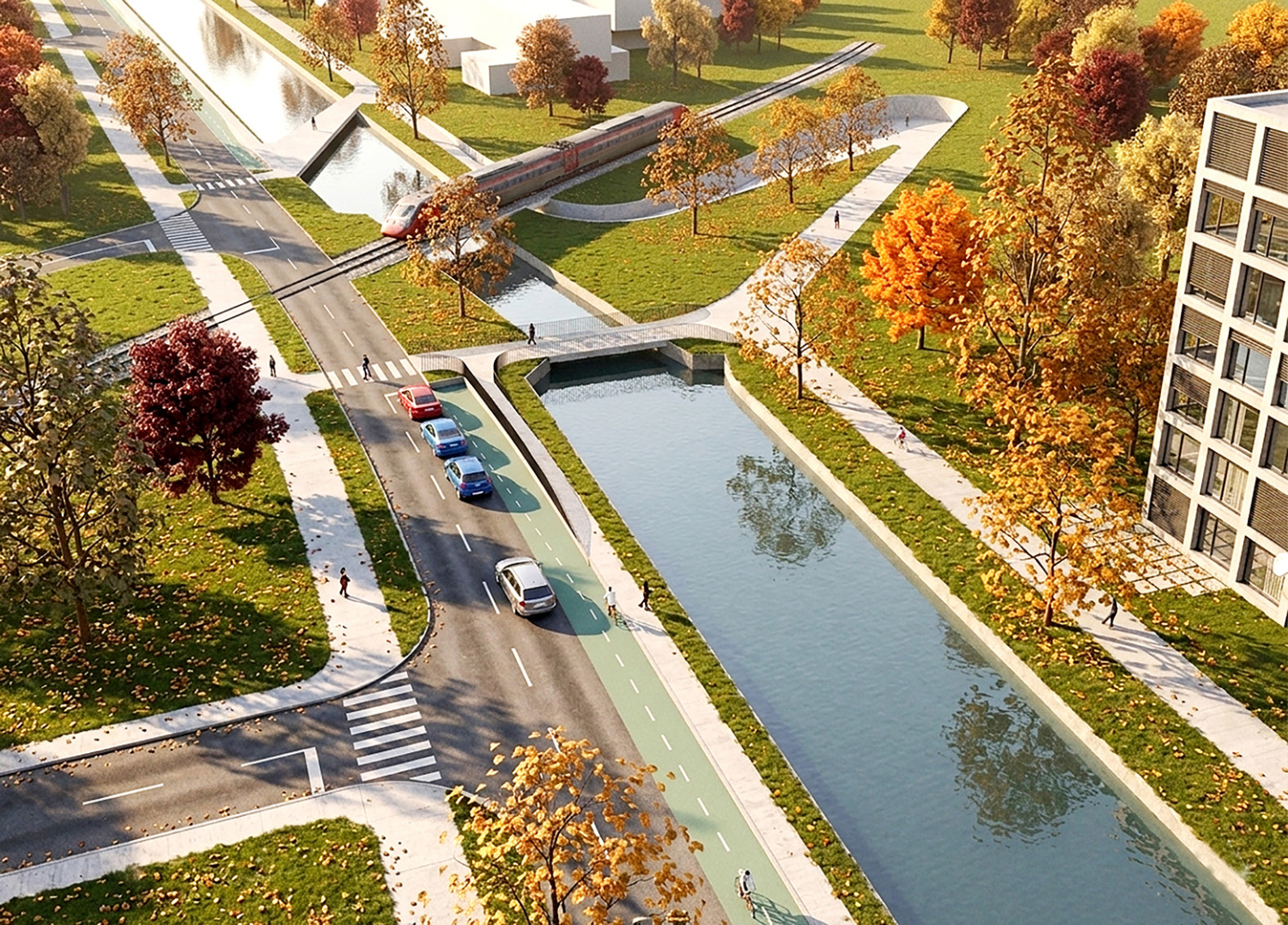
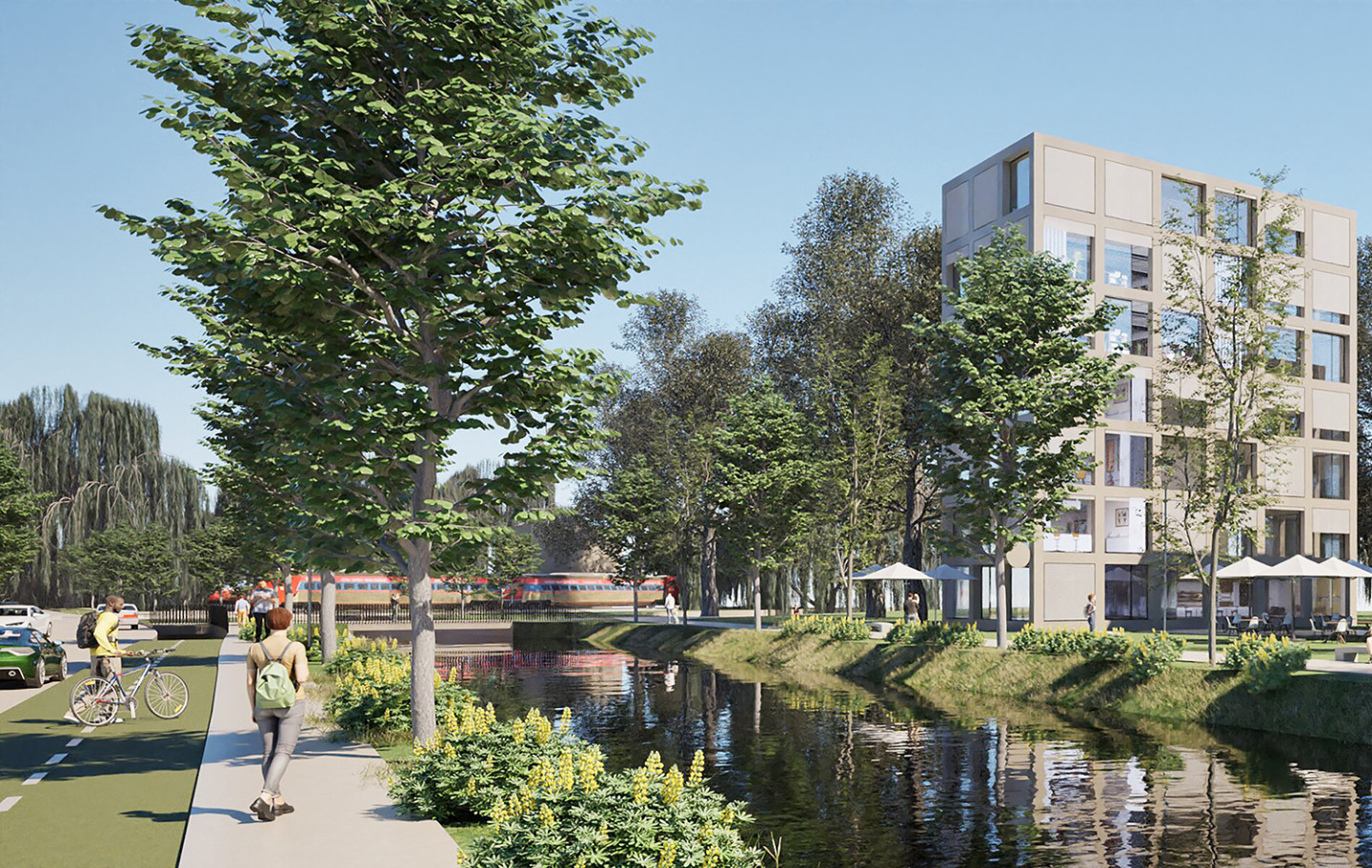
The spatial structure is defined through five key units: relict meander, forest-meadow park, floodplain river edge, urban park, and linear canal promenade. Together, they form a continuous ecological system where biodiversity, resilience, and human experience are inseparable.
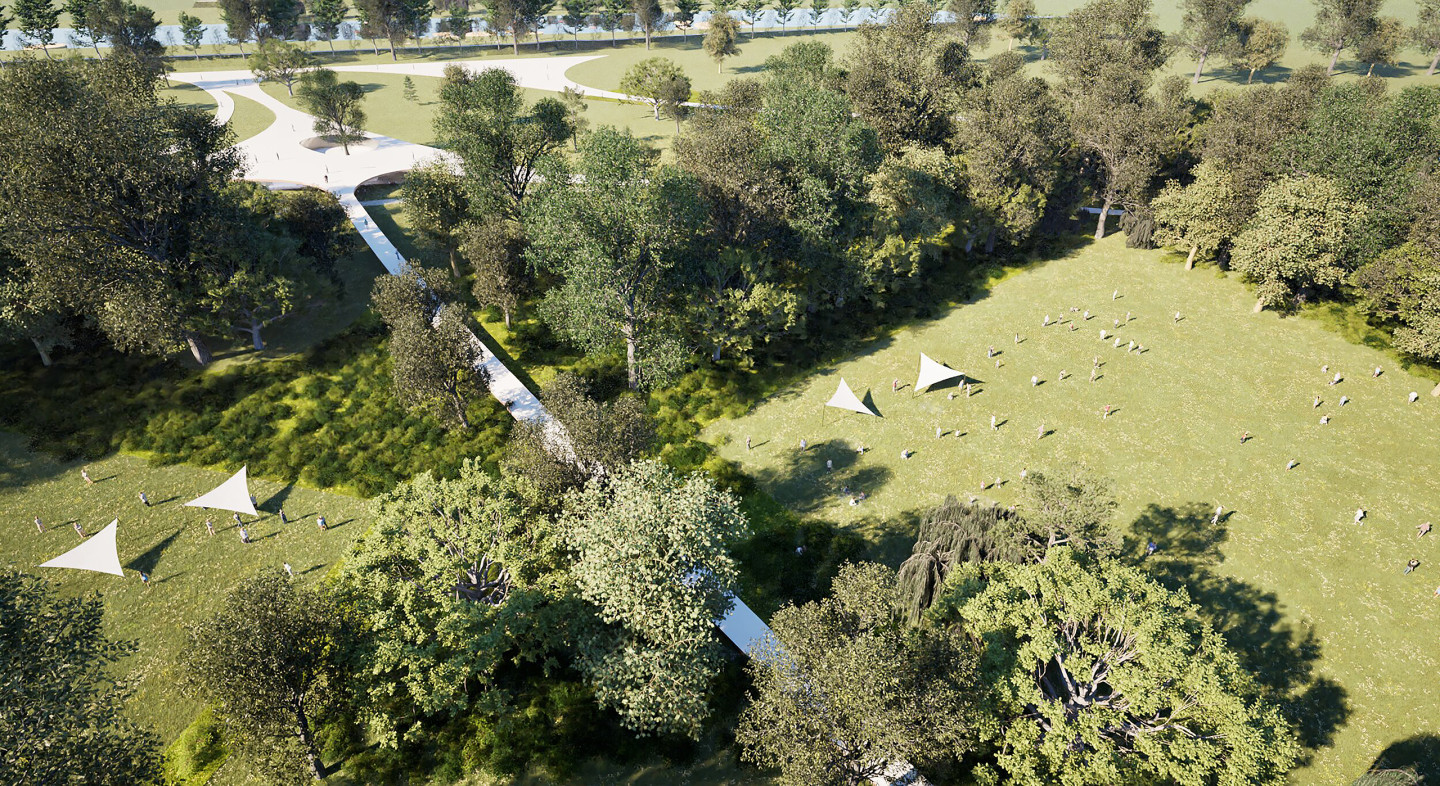
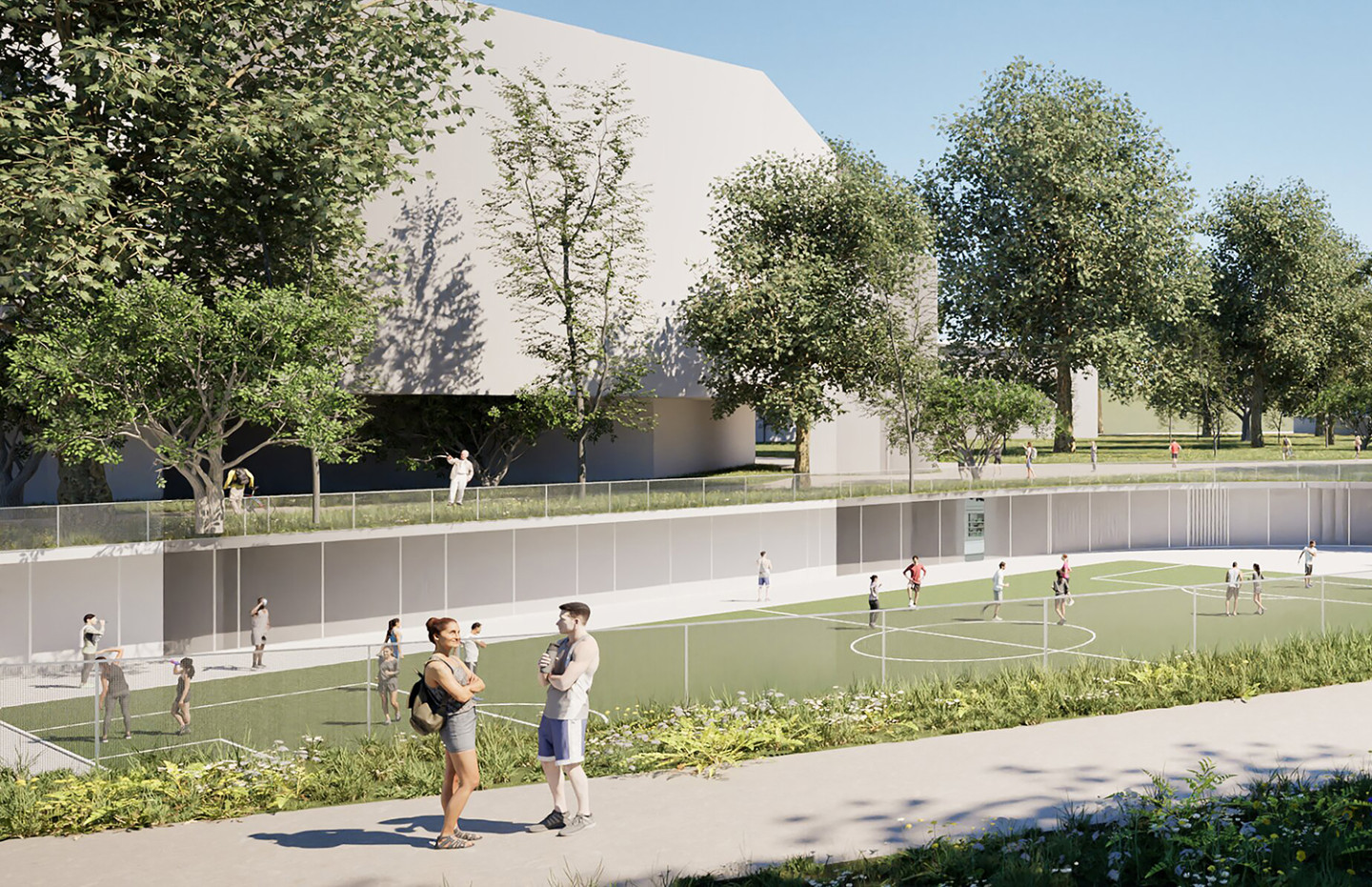
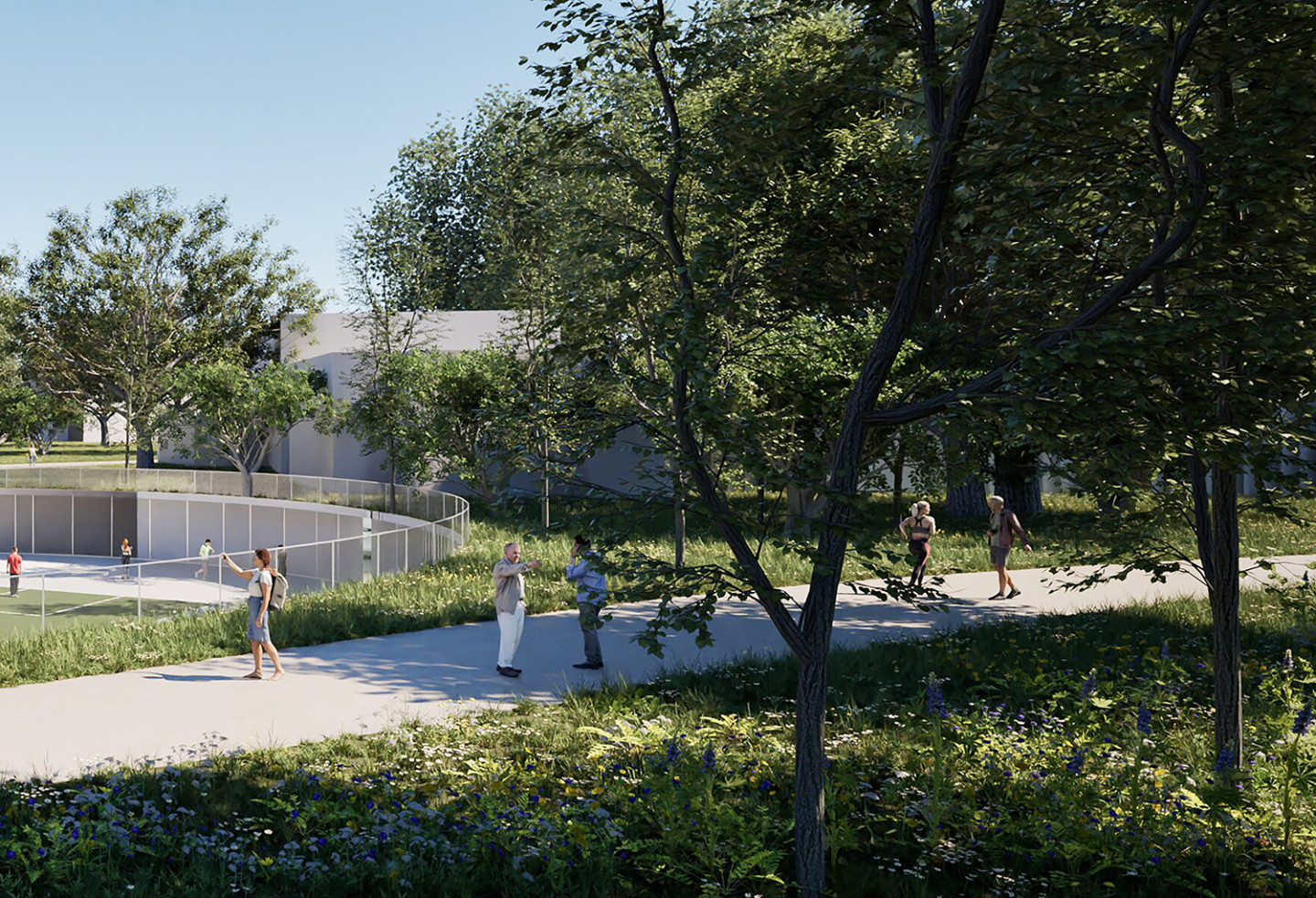
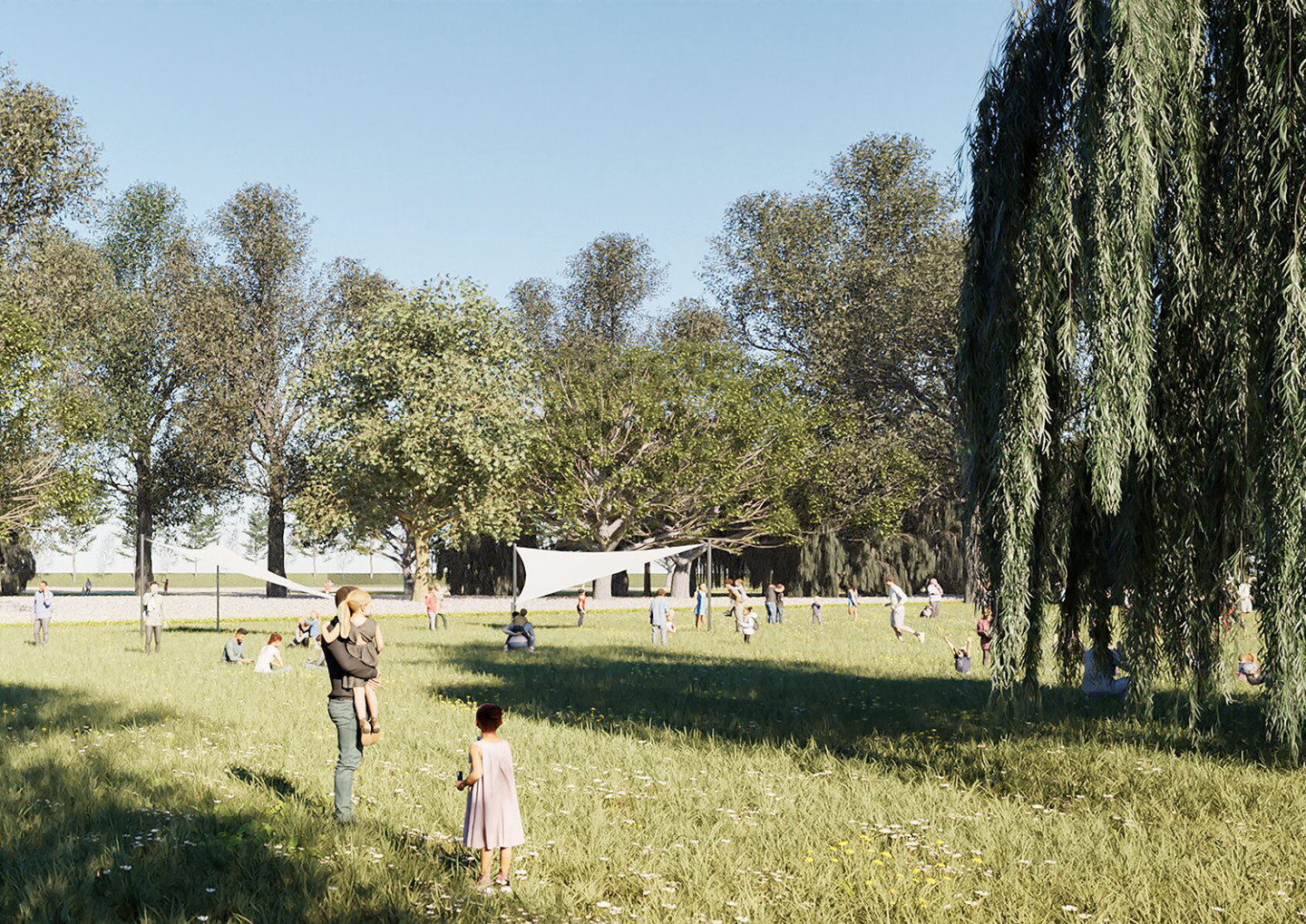
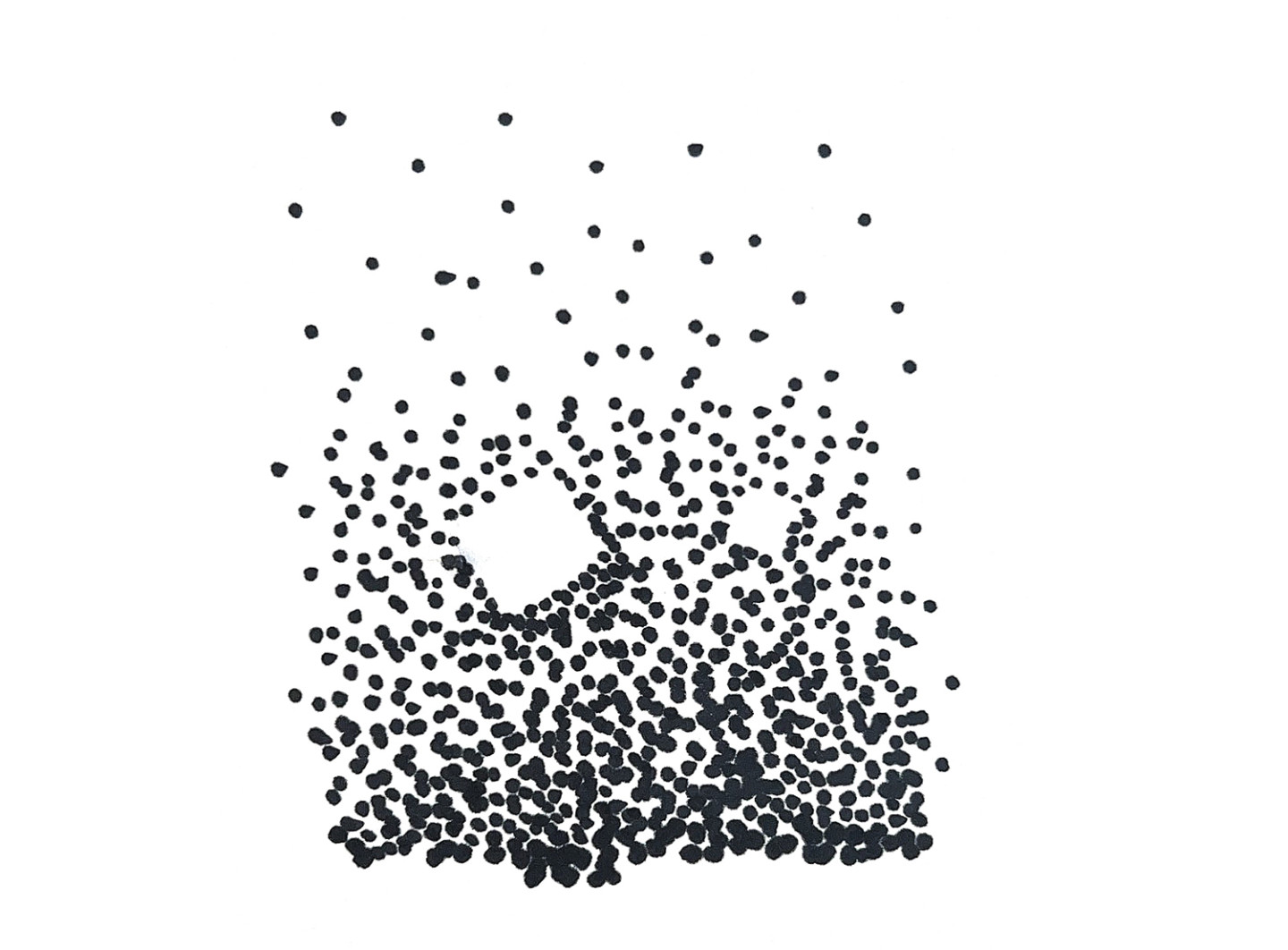
The design establishes a gradient between wild and designed landscapes—dense forest transitions into open meadows and ultimately towards the river. Meadows act as the central social and programmatic spaces, accommodating recreation, events, and everyday use.
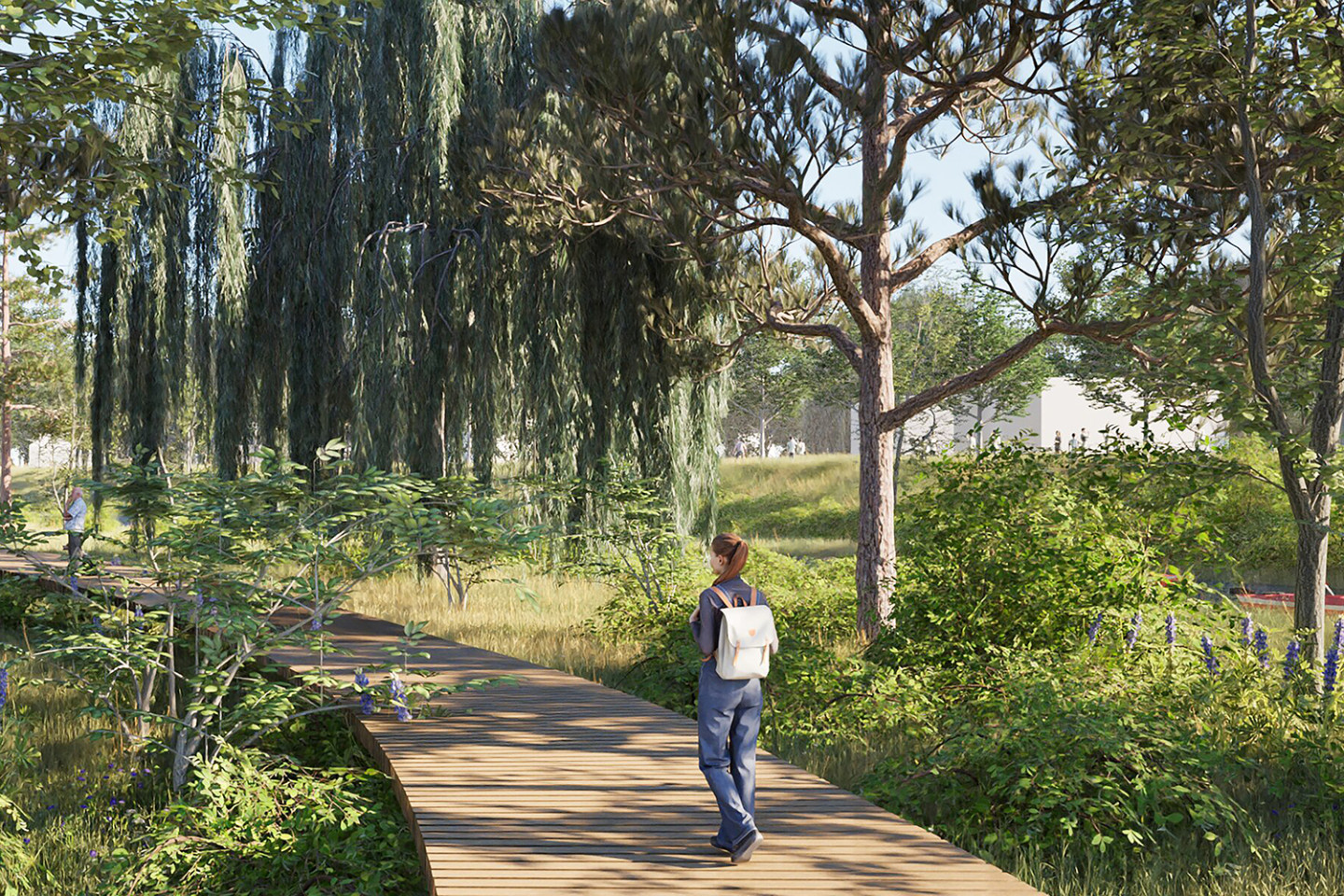
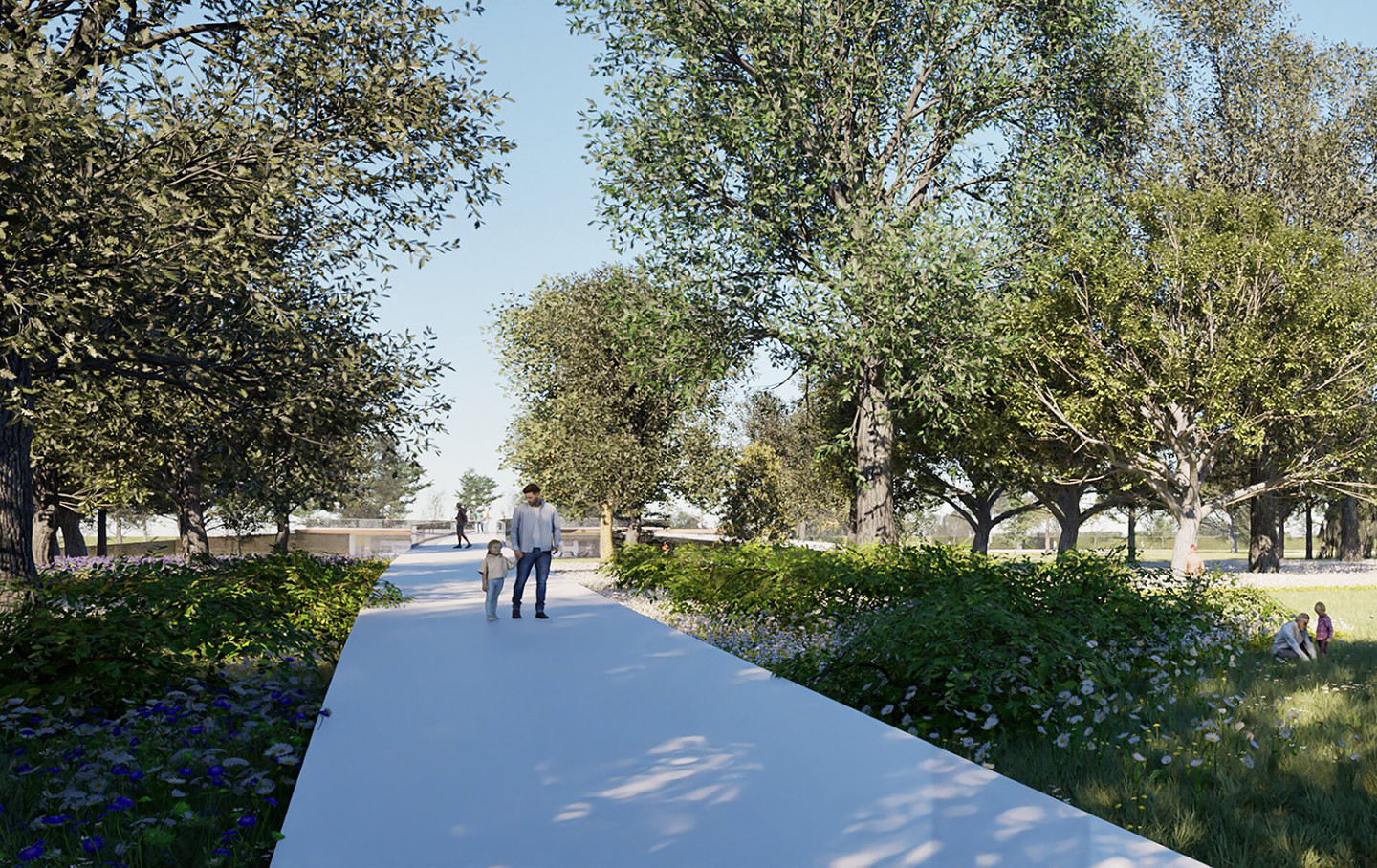
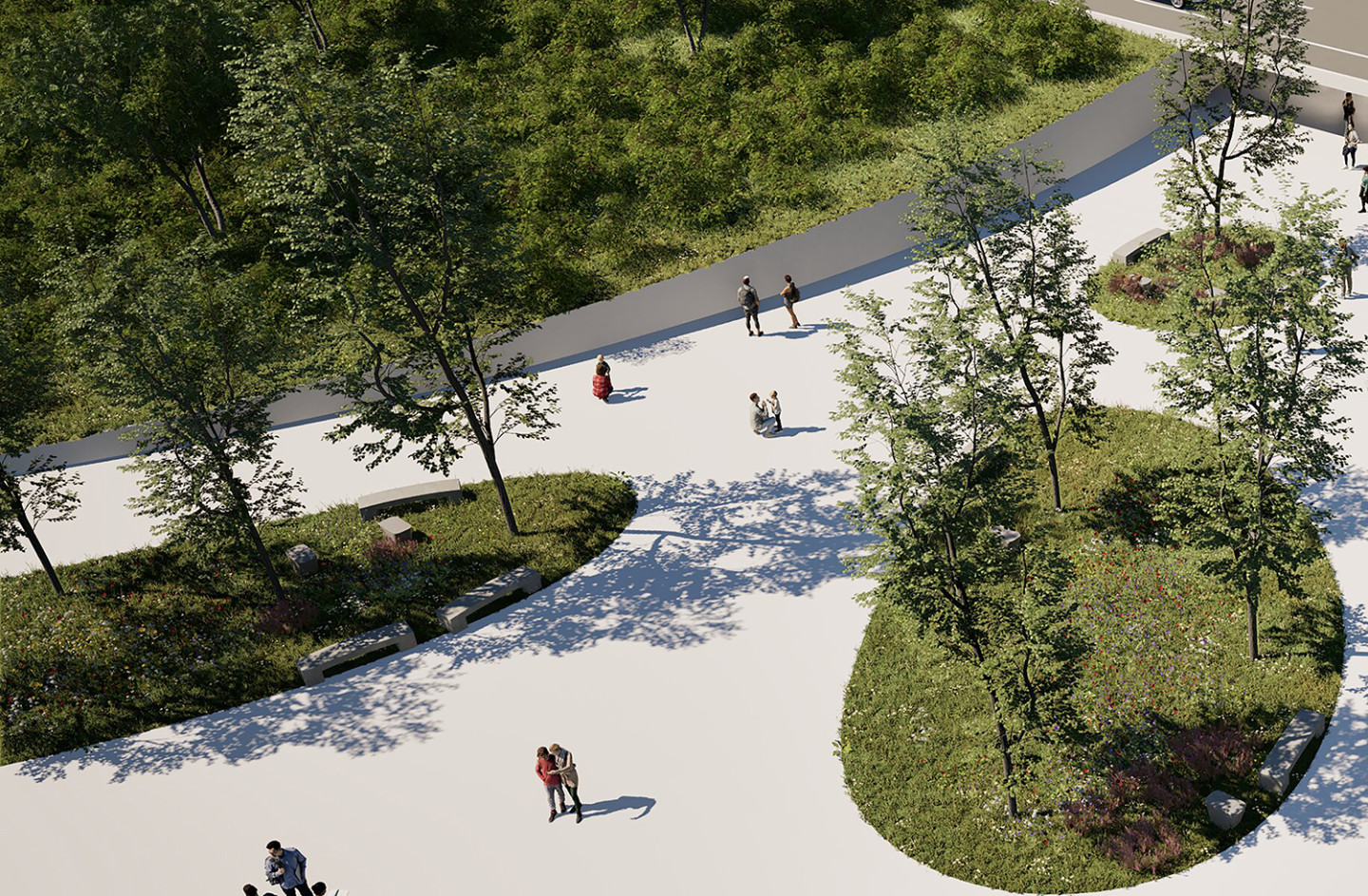
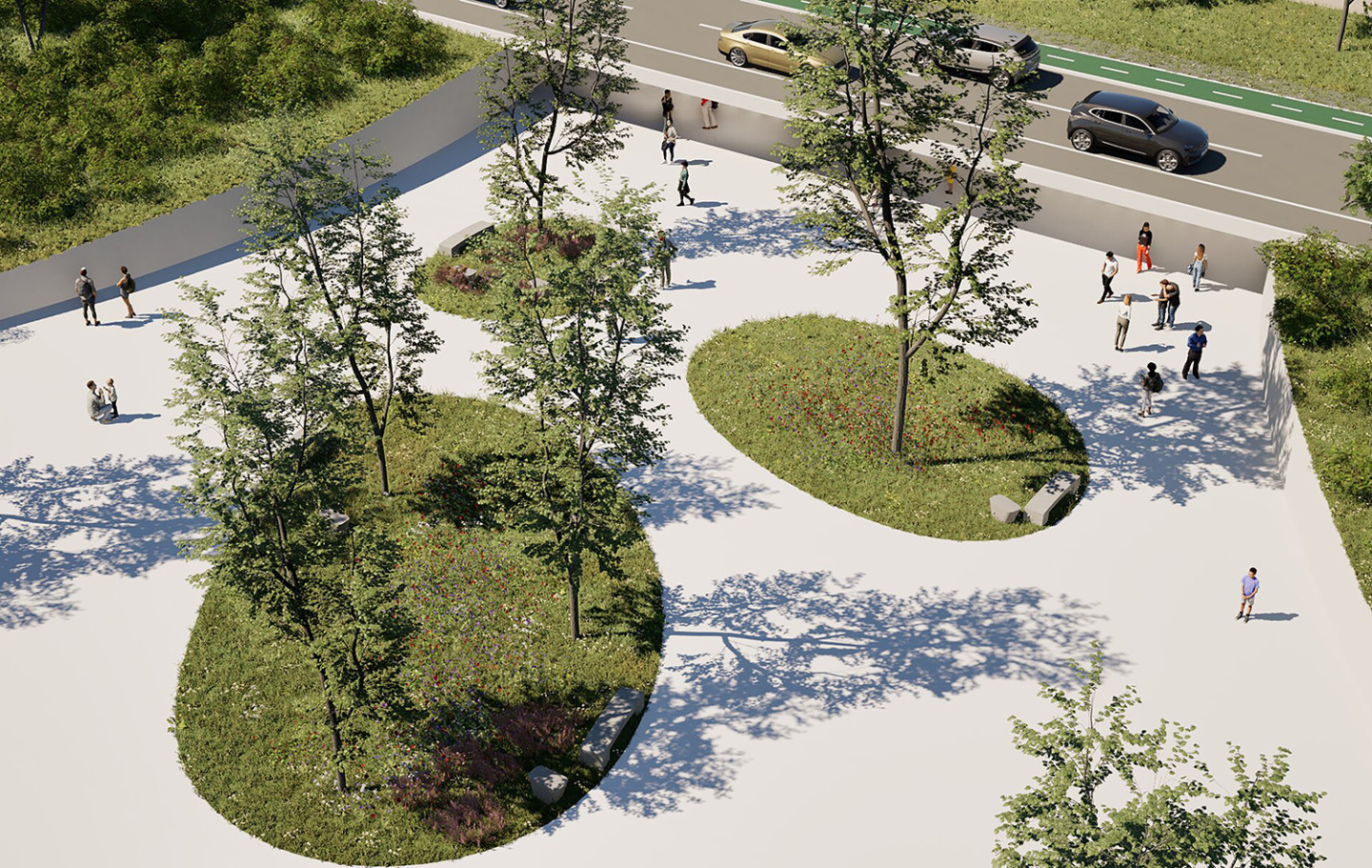
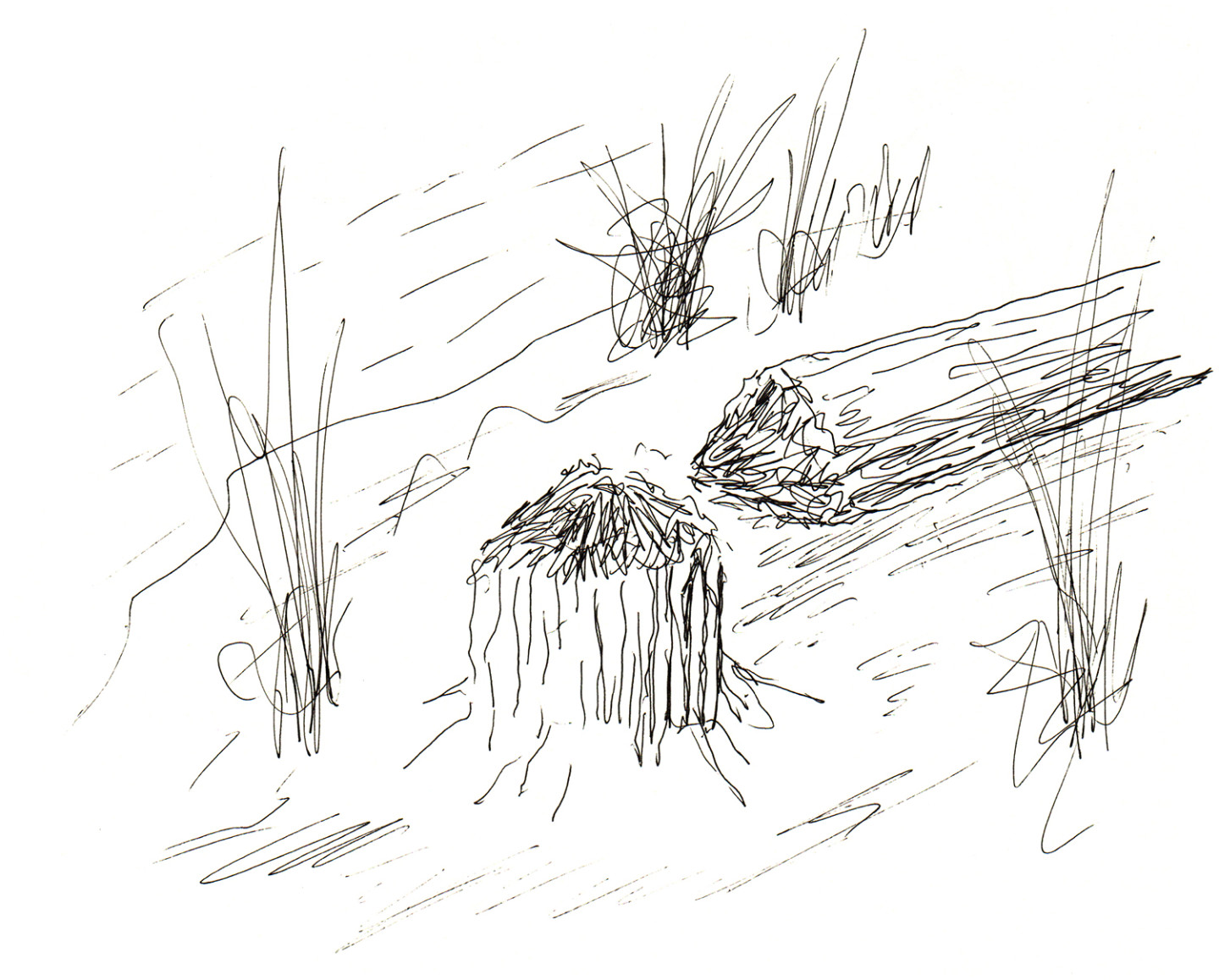
Vegetation is predominantly indigenous, preserving existing trees and forming ecological corridors. Natural processes guide the design, supported by sustainable systems such as rain gardens and controlled water flows. Paths are minimally invasive, adapted to terrain and ecology, ensuring continuity without disrupting biocenosis.
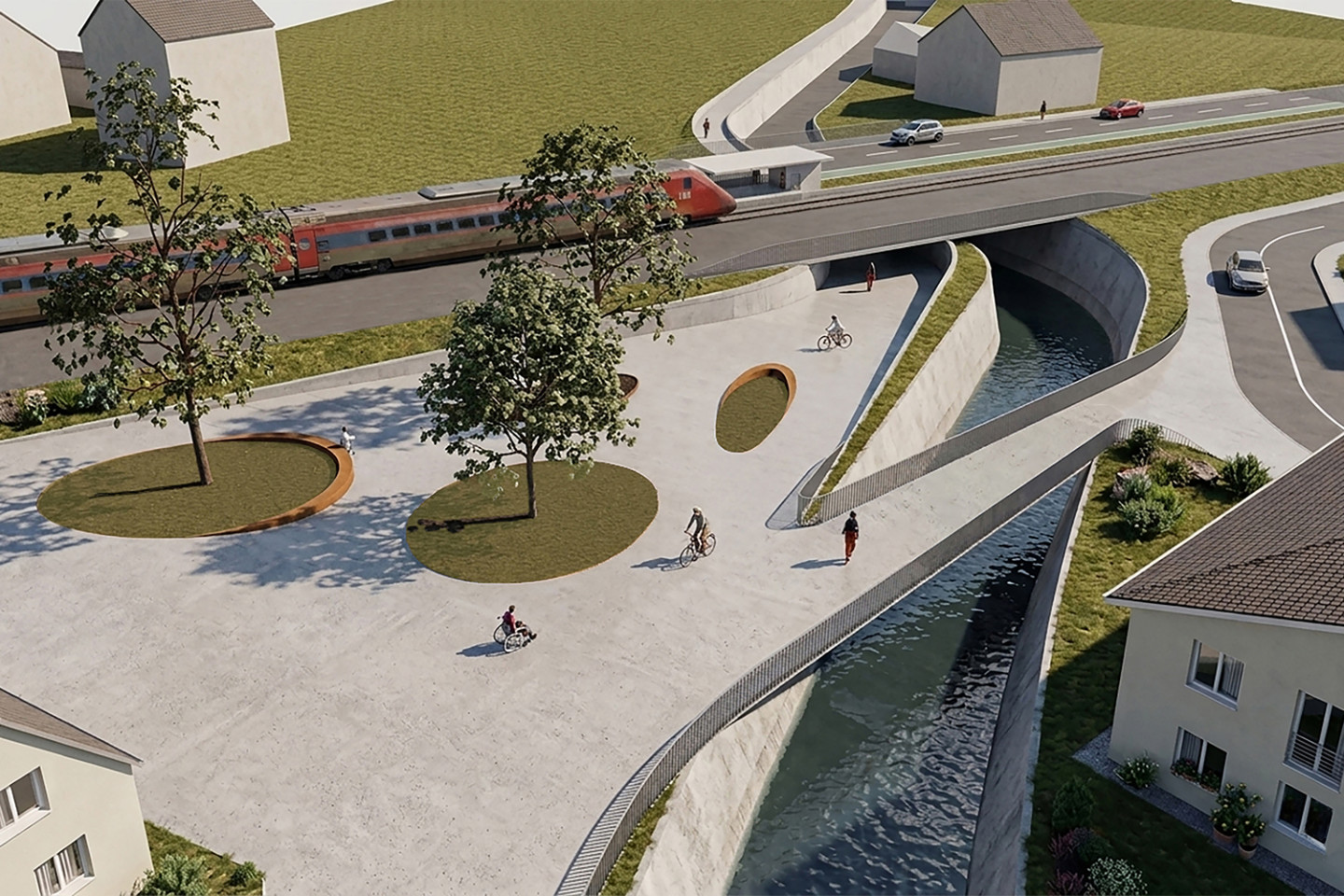
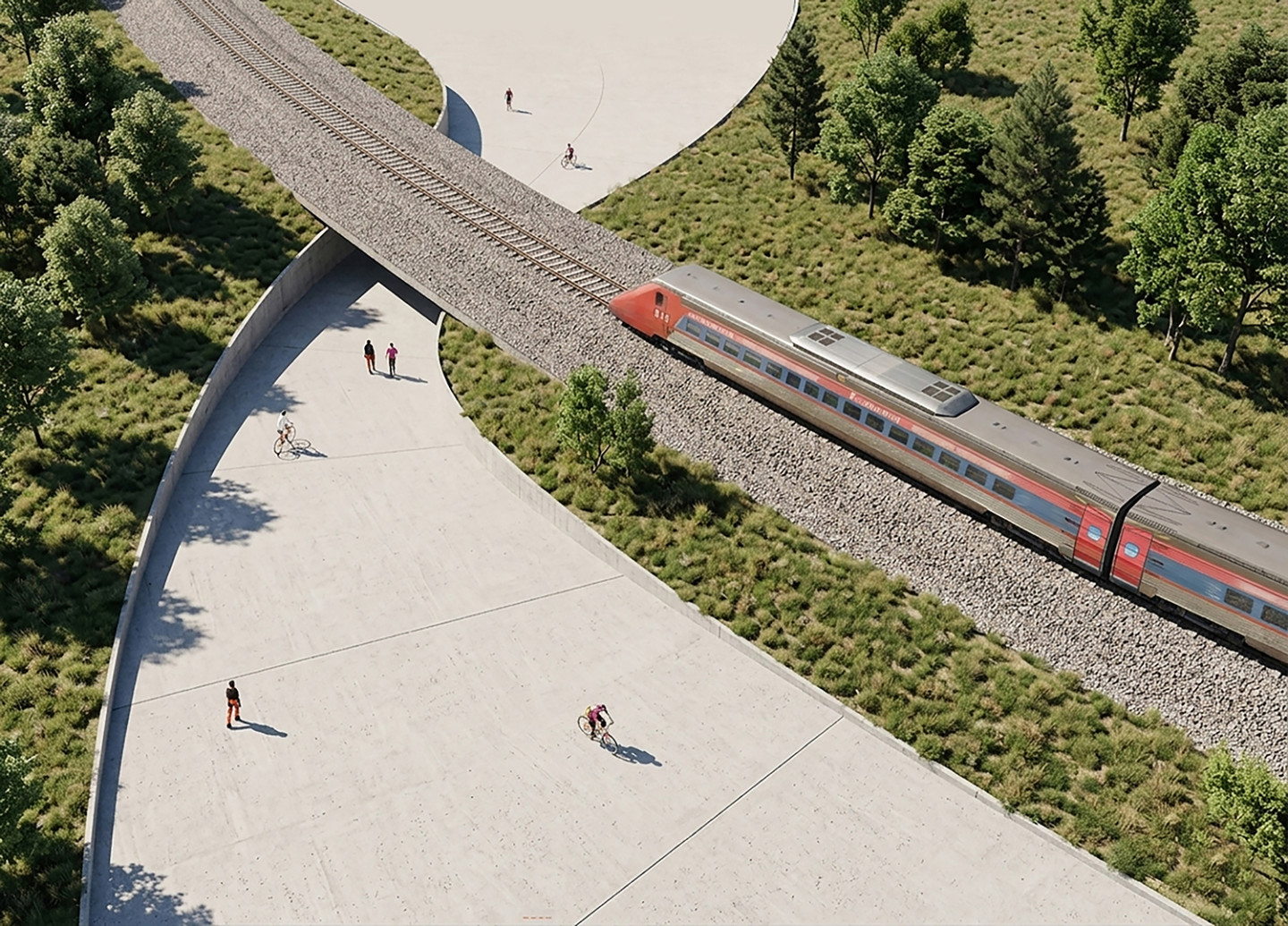
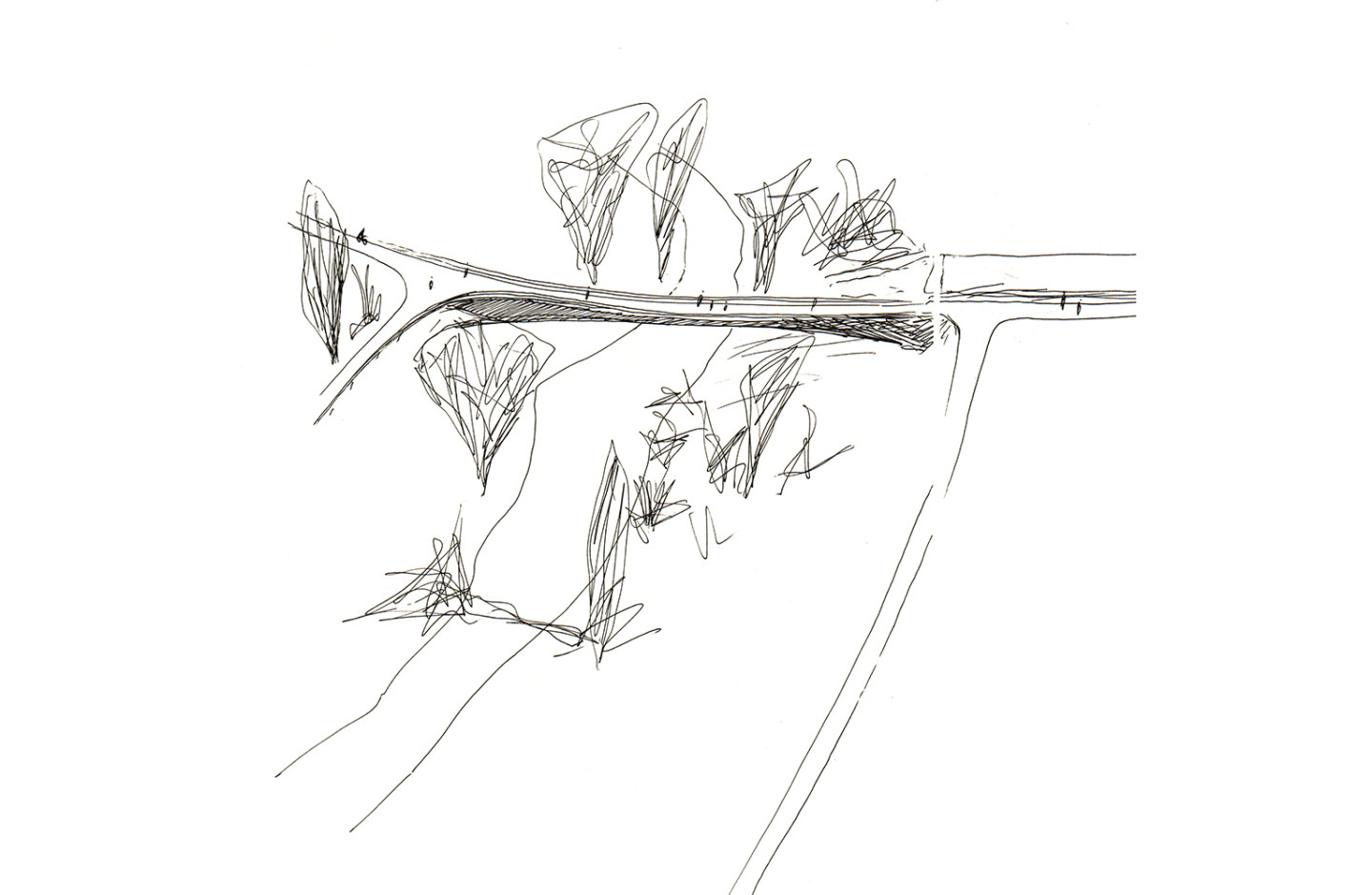
Human infrastructure—bridges, underpasses, promenades, and mobility routes—is carefully integrated to ensure uninterrupted connectivity while avoiding habitat fragmentation. The park remains fully pedestrian-oriented, with layered circulation systems connecting the city, river, and landscape.
CURIOSITIES
The project introduces the concept of “dark infrastructure”—a network of unlit ecological corridors combined with controlled lighting in public areas, protecting nocturnal habitats while ensuring safety and usability.
A rich biodiversity—birds, fish, bats, amphibians, and reptiles—forms the basis of the design, with habitats carefully preserved and expanded. Rainwater management systems not only control drainage but actively create new ecological niches.
The park promotes health and well-being through daily interaction with natural processes, supporting both physical and psychological regeneration while fostering ecological awareness in children and adults.
A former industrial facility—the Electrical Complex—is reimagined as a museum and educational center, where a restored turbine system generates renewable energy for public lighting while educating visitors about water as a resource.
Additional programmatic elements include a biodiversity center, equestrian education facilities, and an extensive network of pedestrian and cycling routes, making the park a multifunctional landscape that merges ecology, infrastructure, and community life.
program:
public space, urbanism
status:
competition
year:
2026
location:
Targu Mures, Rumunjska
size:
46 ha
authors:
ATMOSFERA ™
team:
- Bernarda Silov, dipl.ing.arh.
- Davor Silov, dipl.ing.arh.
- Kristina Rogić, mag.ing.arh.
- Leila Daoud, mag.ing.arh.
- Maria Čirko, stud.arh.
- Gita Čošić, stud.arh.
- Landscape architect: Dr.Sc. Ines Hrdalo Mag.Ing.Prosp.Arch., Asistant profesor, Department for horticulture, landscape architecture and historical gardens, Agricultural faculty, University of Zagreb
- Ecologist/biologist: Fanica Vresnik MSc.Biol.
- Roads and bridges engineer: Antonio Pimentel Adao da Fonseca B.Sc. Civil. Eng., Adão da Fonseca – Engenheiros Consultores, Lda, Porto, Portugal
- Hydrotechnical construction engineer: Andrino Petković B.Sc. Civil. Eng., Fidon d.o.o. , Zagreb
- Hydro-edilitary engineer: Dean Skira, light designer CLD, Skira d.o.o., Pula
visualization:
ATMOSFERA ™, Malgorzata Lodzinska, mag.ing.arh.